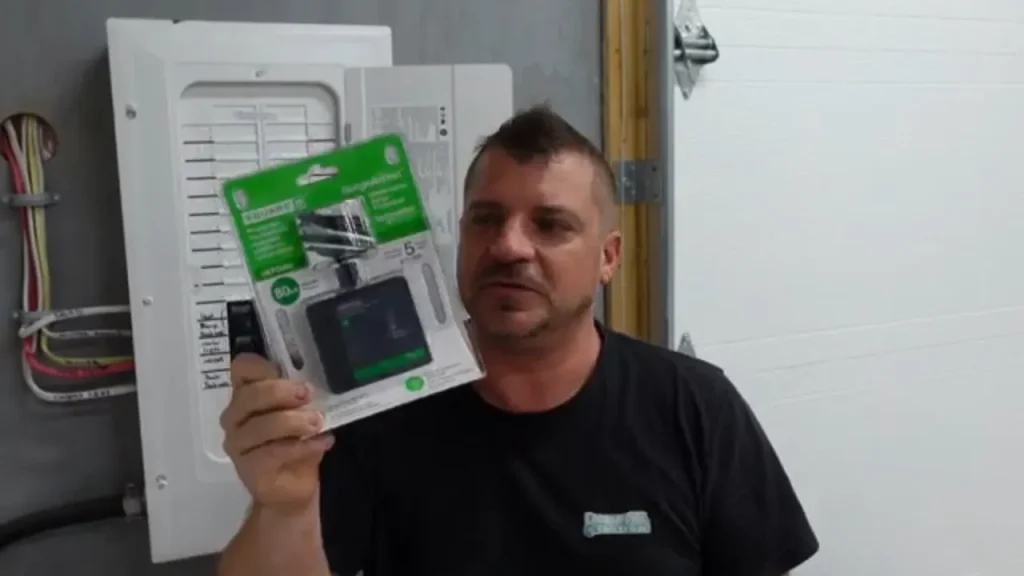
Welcome back! Today we’re diving into two of the most common — and most dangerous — electrical misunderstandings homeowners run into: The #1 Cause Of Fires in Your Home
- Whether outlet amperage actually matters, and
- How extension cords lead to electrical fires.
Let’s break it all down in simple terms and show you exactly why these things matter.
Why Outlet Amperage Matters
In your home, different outlets exist for a reason. A standard 15-amp outlet is designed for everyday plugs. A 20-amp outlet is common on kitchen counters. Dryers, stoves, and welders each have their own dedicated receptacles with their own wiring and breakers.
Each of these circuits includes:
- A specific wire size,
- A matching outlet, and
- Proper overcurrent protection (the breaker).
You cannot mix and match these.
A simple demonstration
Imagine four circuits:
- 15-amp breaker → 15-amp wire → 15-amp outlet
- 20-amp breaker → 20-amp wire → 20-amp outlet
- 30-amp breaker → 10-gauge wire → 30-amp dryer outlet
- 50-amp breaker → 50-amp wire → 50-amp outlet
Everything is matched for safety.
Now here’s what not to do — and yes, we’ve seen it:
Installing a dryer receptacle on tiny 14-gauge wire. The appliance tries to pull 30–50 amps, but the wire is only rated for 15. The breaker allows more power than the wire can handle, and the wire overheats and burns.
The important rule:
Never install a receptacle that allows more current than the wire can safely carry.
Breakers protect wires, not appliances.
If the wire overheats, you have a house fire waiting to happen.
There are times you can use larger wire on a smaller breaker — for example in temporary setups — but you should never undersize the wire. The wire’s amp rating is the critical piece.
Bottom line
Amperage ratings exist for your safety. Outlets, wires, and breakers all work together, and they must be matched correctly. Don’t mix amperages, and don’t DIY electrical if you’re unsure. Call a certified electrician.
The #1 Cause of Electrical Fires: Extension Cords
Let’s talk about something even more common — and more dangerous:
Extension cords.
Extension cords cause thousands of home electrical fires every year, especially those thin, cheap cords from discount stores.
Why they cause fires
Extension cords don’t trip your breaker. The breaker only sees the load on the circuit — not the size of the cord you’re using.
House wiring is rated for 15 amps. A tiny discount-store extension cord might only be safe for 7 or 8 amps. If you plug a high-draw appliance into it, the cord overheats and literally melts.
A quick demonstration
Compare:
- A standard 15-amp house wire
- A thin extension cord wire
The difference is huge. That tiny cord cannot safely carry the same load. So when you plug in something like a heater, and it tries to pull the full 15 amps, the extension cord overheats instead of tripping the breaker.
And that’s how fires start.
A Real-World Example: Two Heaters and One Extension Cord
Let’s say Grandma is cold and wants to run two heaters or a heater plus a heated blanket.
If both heaters plug directly into a 15-amp wall outlet, the breaker will trip — that’s good! It stops overheating.
But if you use a cheap extension cord to reach the outlet:
- The heaters still try to pull 15+ amps
- The extension cord can only handle ~7–8 amps
- The breaker doesn’t see the problem
- The cord melts and starts a fire
The extension cord becomes the weak link that isn’t protected.
Another Fire Risk: Overfusing
Some older homes have fuse panels. If a 15-amp fuse keeps blowing and someone “fixes” it by installing a 20-amp fuse, this creates a deadly situation:
- The wire in the walls is still rated for 15 amps
- The new 20-amp fuse now allows more current than the wire can handle
- The wire overheats behind the walls
- A hidden fire starts
Never, ever upsize a fuse to solve a tripping problem.
Final Thoughts
Electrical systems are designed with matched components for your safety:
- Correct outlet
- Correct wire gauge
- Correct breaker or fuse
Extension cords and oversized loads bypass those protections and are the leading cause of home electrical fires.
Stay safe, never overload circuits, avoid cheap extension cords — and absolutely never upsize fuses or mix amperages.
If you enjoyed this breakdown and want more hands-on demonstrations, check out our other videos on the site. Everything is neatly organized and searchable.
Thanks for reading, stay safe, and we’ll see you next time!