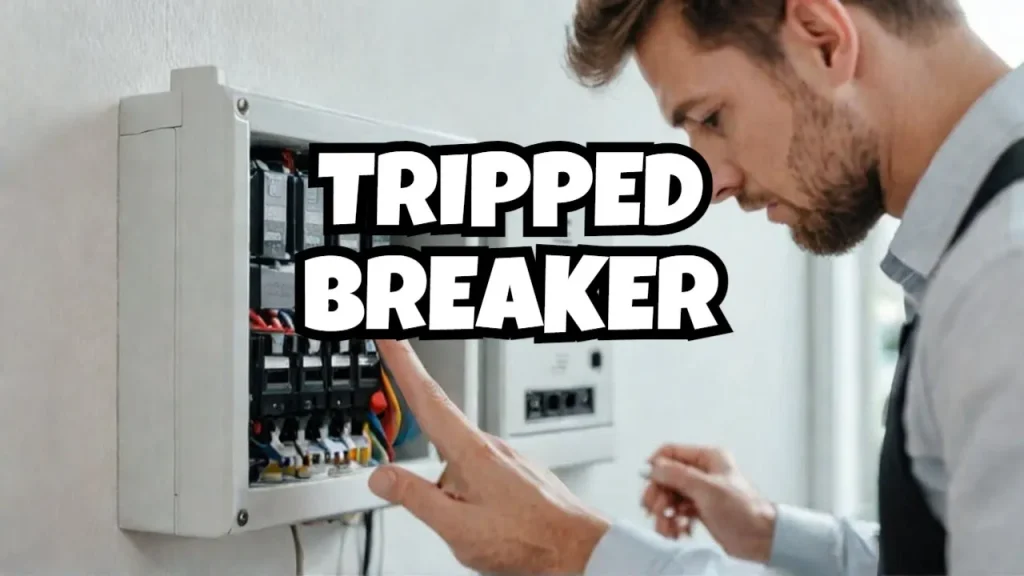
How To Wire For Both Arc Fault And Ground Fault VS Each Other. Today, we’re diving into a common source of confusion in residential wiring: the difference between arc fault circuit interrupters (AFCIs) and ground fault circuit interrupters (GFCIs). A lot of people mix these two up, so let’s break down what they do, how they work, and why you may—or may not—need them in your home.
And hey—don’t forget to like and subscribe, or head over to our website (link in the description) to learn more and check out our recommended products. Also, we’d love your input: Are AFCIs code in your area? Do you find them helpful—or just plain annoying?
GFCI: Ground Fault Circuit Interrupter
Most people recognize GFCIs as the outlets with the test and reset buttons. These devices protect you from electrical shock by detecting leakage current—typically any variance between hot and neutral that indicates current is leaking to ground (like through water—or a person).
If the leakage is greater than 5 milliamps, a GFCI will trip.
You’ll often see GFCI receptacles:
- On kitchen counters
- In bathrooms
- At exterior outlets
But here’s the thing—moisture is their enemy. Especially on outdoor receptacles, GFCIs tend to fail early. We’ve had to replace them within six months just from weather exposure.
The Better Option: GFCI Breakers
Instead of installing GFCI receptacles outside, we’re switching to GFCI breakers. They provide the same protection but sit safely inside your electrical panel.
This means:
- You don’t have to go outside to reset them
- They’re protected from the elements
- Troubleshooting is easier
They install like regular breakers, and the test button works the same. If it trips, it goes into a “spongy” halfway position. You’ll need to switch it fully off, then back on to reset. A white pigtail wire connects to the panel’s neutral bar, and the circuit neutral goes directly to the breaker.
We use these on:
- Hot tubs
- Outdoor plugs
- Moisture-prone areas
AFCI: Arc Fault Circuit Interrupter
Now, onto AFCIs. These came into play in the 2014 electrical code here in Canada and became much more prominent in the 2018 update.
Initially, arc faults were only required in bedrooms. But today, they’re required on almost every plug circuit—except for kitchen counters. And the upcoming 2024 code may even require them on lighting circuits.
That’s a big jump—and it’s not cheap. A regular breaker costs around $8, but an AFCI breaker? Try $80.
What Does an AFCI Do?
An arc fault breaker detects arcing—tiny electrical sparks that can:
- Wear out outlets
- Create heat
- Cause fires
Ever unplugged an old kettle or vacuum and seen a blue spark? That’s an arc.
AFCIs trip when they detect those little arcs, often caused by:
- Unplugging devices without switching them off
- Vacuum cleaners (especially if unplugged while running)
- Older lamps or frayed cords
Real-World Issues
These breakers are prone to nuisance tripping, and that can lead to some awkward service calls. Imagine explaining to a customer that their $800 Dyson vacuum trips the breaker—not because it’s faulty, but because the AFCI is doing its job.
So, while AFCIs do provide extra safety, they can be frustrating in practice.
Summary: GFCI vs AFCI
| Feature | GFCI | AFCI |
|---|---|---|
| Full Name | Ground Fault Circuit Interrupter | Arc Fault Circuit Interrupter |
| Main Function | Detects current leaking to ground | Detects sparking or arcing |
| Trips When… | There’s a ground fault (shock risk) | There’s an arc (fire risk) |
| Common Uses | Bathrooms, kitchens, outdoors | Bedrooms, living areas, general outlets |
| Code Requirement | Moisture-prone areas | Most plug circuits in newer homes |
| Prone to Nuisance Trips? | Yes, especially in damp areas | Yes, especially with vacuums and lamps |
Final Thoughts
So there you have it—GFCIs protect you from shock, while AFCIs protect your house from fire.
We want to hear from you!
- Are AFCIs code in your region?
- Do you find them helpful—or a hassle?
- Have you run into nuisance tripping issues?
Drop a comment below or join the discussion over on our website (link in the description). And while you’re at it, check out our other videos—watch time helps our channel grow, and we really appreciate your support.
Thanks for watching, and we’ll see you in the next video!